
Walking in Wholeness: How to Navigate Your Health Journey with Faith and Grace

If you are a Christian battling chronic illness, slow progress, or health burnout, this blog is for you. The missing piece in most health journeys is not more willpower, it is grace. A faith-based health and wellness journey treats your body as a temple of the Holy Spirit and your daily habits as acts of worship. It holds together the body, mind, and spirit as one because neglecting any one of them weakens the whole. Core biblical health principles like stewardship, self-control, and nourishing your body point you toward sustainable change.
When willpower runs dry, a grace-based approach keeps you going, because it turns every setback into an invitation to lean harder on God. Practical habits like prayer walks, mindful eating, restorative sleep, and daily gratitude are not just good for your health ,they are a form of surrender. If you need a daily companion to walk this journey with you, Grace for the Journey was built exactly for this a full support system for Christians living with long-term illness, designed to meet you wherever your strength is. Wholeness is not a sprint. It is a grace-led walk, one step at a time.
Introduction: A Grace-Led Guide to Wholeness

Have you ever felt like your health gets worse by the day, your body grows weaker, your faith feels stretched thin, and there is just silence in response to every prayer you have made? Every Sunday you probably walk into church with a hopeful spirit and a renewed faith for a miracle for the healing you so desperately desire and somehow the day passes, weeks come and go, and you are still battling your ill health.
You are not alone. For many Christians, the struggle to be healthy already feels like an overwhelming to-do list, especially when there is no improvement in sight. But what if the missing link was not more willpower, but a deeper integration of your faith, something quite different from what you have known? To start a faith-based health and wellness journey, you need to move into the rhythm of understanding the importance of grace in healing, rather than chasing perfection in wellness.
What Does a Faith-Based Health and Wellness Journey Actually Mean?
A faith-based health and wellness journey is a holistic approach to physical, mental, and spiritual wellbeing. It is that place where we see the body as a temple of the Holy Spirit, to be cared for as an act of worship. In simple terms, it is us as Christians using faith to find strength, balance, and purpose in our health.
While the secular world views health as a series of milestones to be accomplished, holistic Christian living views it as a form of worship where we integrate every healthy habit to align with our God-given purpose on earth.

How Does Holistic Christian Living Benefit the Body, Mind, and Spirit?
True wellness is not built in isolation. It is made up of three essential pillars: the body, the mind, and the spirit. If one is neglected, the whole structure weakens.
Through prayer and Holy Scripture, the spirit connects you to the source of life. Your mind governs your emotions and your will. And your body allows you to serve God according to His purpose on earth and to serve the people around you.
When all three are in alignment, you will experience a different level of vitality altogether.
What Are the Core Biblical Health Principles for Modern Life?

The key principles for living a healthy lifestyle as a Christian include:
Caring for your physical health as a way of honoring God.
Eating nourishing meals by limiting refined sugars and saturated fats, and choosing high-quality, unprocessed foods.
Practicing self-control and moderation in what you eat and drink.
Building strong, positive relationships that support your wellbeing.
These principles reflect the biblical concept of stewardship of the body, a reminder that we are managers, not owners, of our health.
Why Is a Grace-Based Wellness Approach More Effective Than Willpower?
You cannot depend on willpower alone when it comes to sustaining your health journey especially when you are ill, managing constant hospital visits, and keeping up with a long list of medications. Willpower eventually runs dry. That is where grace steps in.
A grace-based wellness approach recognizes that there will be days when you lose hope, but it reminds you that those hard days do not define your progress.
Failing to meet your health goals, or failing to break free from a chronic illness, might tempt you to give up and lose faith. But here is what you need to know: in a grace-led journey, failure is not the end, it is an invitation to lean harder on God's strength. This shift is the secret to overcoming health burnout with grace.
What Are the Most Sustainable Health Habits for Believers?

The hallmark of sustainability is a faith-centered lifestyle. And we are talking about a lifetime of faithfulness living in total surrender to the will of God and entrusting your health to Him, regardless of the pace of improvement.
Sustainable, grace-rooted health habits look like this:
Prayer walks: Combining every physical movement with a spiritual conversation with God.
Mindful eating as worship: Slowing down at mealtimes and expressing gratitude to God for His provision.
Restorative sleep: Viewing rest as an act of trust in God's sovereignty.
Daily gratitude practice: Using prayer or a gratitude journal to count your blessings because research shows that practicing gratitude can significantly increase happiness and improve overall health.
When you begin to embrace these Christian self-care practices, you are walking toward your own restoration.
How Does Grace for the Journey Support Your Transformation?
This blog can give you a roadmap for navigating chronic illness or a health crisis but what about having a daily companion that gives you a consistent, grace-filled dose of support to help you heal in body and soul?
That is exactly what Grace for the Journey was created for.
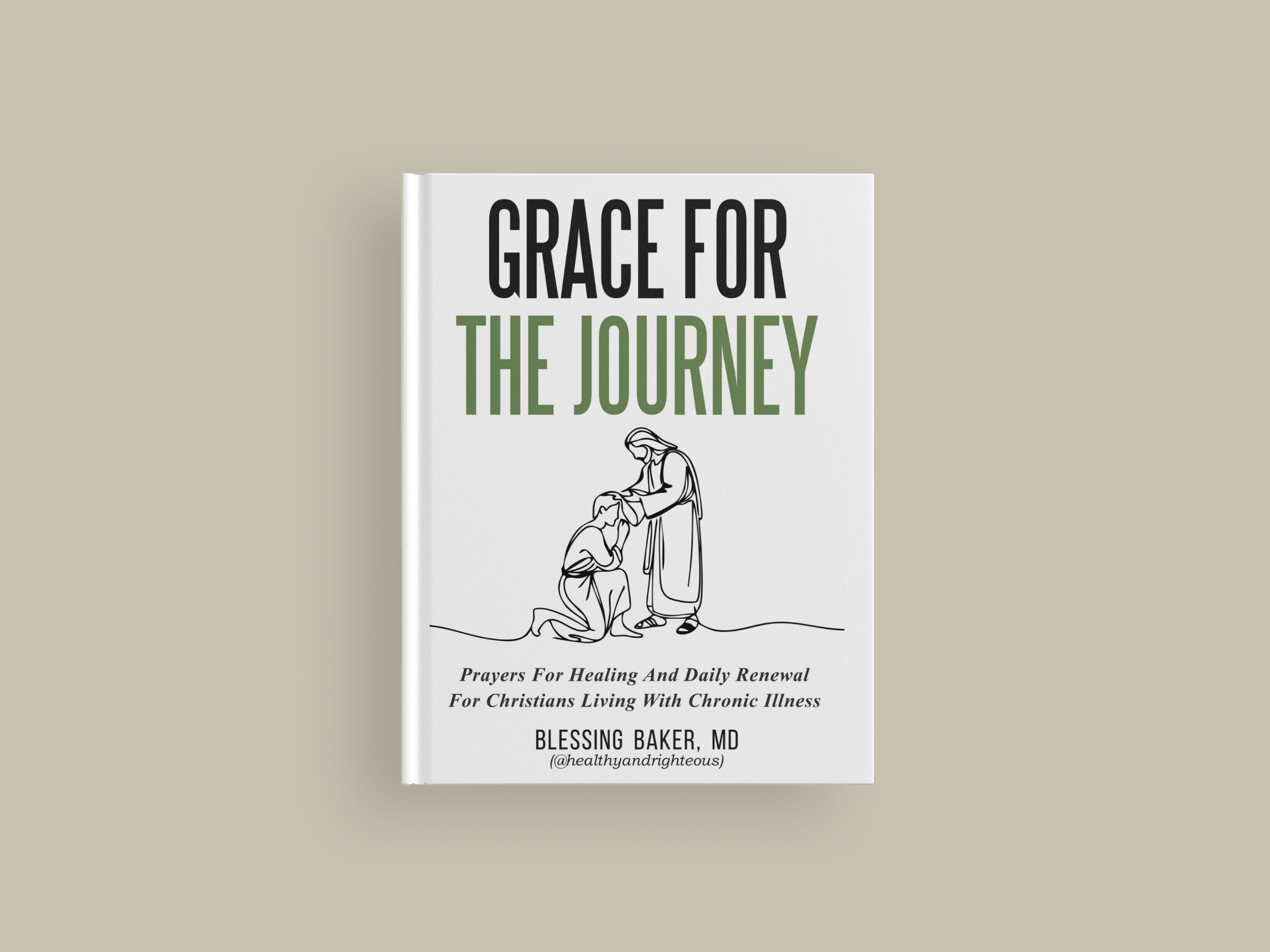
This is not another Christian book telling you to pray longer or have more faith. It was written for the brokenhearted. For those who are quietly wondering if God has forgotten them in this season of illness. It is a book and a full support system created for Christians living with long-term illness, ongoing symptoms, and seasons of waiting.
It is a system designed to meet you when you have energy, and when you do not.
It holds space for your faith, your questions, your limitations, and your hope. Whether you prefer digital tools for low-energy moments or a physical book for slow mornings with God, every format meets you where your strength is.
Grace for the Journey provides grace-guided health habits that bridge the gap between where you are right now and the wholeness you desire designed to help you navigate the messiest parts of your transformation with the one thing most wellness plans leave out: the power of God's grace.
How Can I Find Peace in the Health Journey When Progress Is Slow?

The hardest part of any faith-centered healing journey is the middle where the initial enthusiasm has faded, healing has not come, and hope feels far away. I want you to remember this: God is more concerned with the kind of person you are becoming in the journey than with the speed of the result.
If progress feels slow, it may be because God is doing a deeper work in your character than a quick recovery would allow. So anchor yourself in who you are in Christ. Your identity in Him does not shift with your symptoms.
Are You Ready to Walk Your Faith-Based Health and Wellness Journey?

Wholeness is not a sprint. It is something you journey into one step at a time, anchoring each moment in Christ. To find joy in the middle of suffering, we need God's grace to walk us through it. Because when we depend on our own willpower, we eventually fail. But with grace and prayer, we can find peace in the midst of the storm.
Frequently Asked Questions
Is the concept of "self-care" actually biblical?
Yes. Self-care is biblical when viewed through the lens of stewardship rather than self-indulgence. The Bible describes the body as a temple of the Holy Spirit (1 Corinthians 6:19–20), which means that maintaining our physical and mental health is an act of worship and preparation for service.
How do I overcome "health guilt" and the cycle of quitting?
Overcoming health guilt requires shifting from a law-based mindset to a grace-based mindset. When you view your health as a journey with God, a bad day is not a failure, it is an opportunity to experience the mercies of God, which are new every morning.
What is the best way to stay consistent with a healthy lifestyle as a Christian?
The best way to stay consistent is to find a "why" that is bigger than yourself. When your health is tied to your ability to care for your family, serve your church, and fulfill your calling, you have a far stronger motivation than simply wanting to look better or feel better.
Can spiritual disciplines like prayer and fasting actually improve my physical health?
Yes. Scientific research has shown that spiritual disciplines such as prayer and meditation can lower blood pressure and reduce cortisol levels. Similarly, biblical fasting can provide metabolic benefits such as improved insulin sensitivity when practiced safely.
